
Friday, July 16, 2010
Bear Sighting
For some strange reason, everyone around here is dying to see more grizzlies. Well, it was a dream come true for the Natural Resources team when a 400 lb brown bear was spotted in Dyea on Wednesday. I was working only a few hundred feet from where the bear was sighted the following day and I spent the whole day nervously looking over my shoulder. Luckily, all I saw was some rather fresh bear scat, which was enough excitement for me.

Monday, July 12, 2010
Lessons in Grocery Shopping
 Well, I guess I still haven't learned my lesson... no eggs, milk, or yogurt until Wednesday.
Saturday, July 10, 2010
Stergill's Landing
One of the greatest (or possibly only?) benefits of being exposed to 20.5 hours of sunlight each day is that I have been able to more fully experience the beautiful land I am in. It's a little comical how quickly the atmosphere of the town changes once the cruise ships leave port. It seems as though the whole town is outside, running, biking, or lounging in the lingering sun. Yesterday after work I decided to explore Stergill's Landing, a rocky beach just a few miles from town. After hiking through the lush temperate rainforest, I was surprised to finally arrive at this scenic shore.


Dyea, AK
Although I am living in the town of Skagway, I am spending about 50% of my time here working in the town of Dyea. Dyea is only 9 miles from Skagway and was once a competitive harbor were gold-seeking settlers began their journey to the Yukon Territory between 1897-1898. Once the White Pass- Yukon Railroad was completed in Skagway in 1899, Dyea died almost as quickly as it bloomed. Today, nature has reclaimed most of what once made up the town and isostatic glacial rebound has changed the landscape significantly. It is by far more "wild" than Skagway and offers a different type of Alaskan beauty.
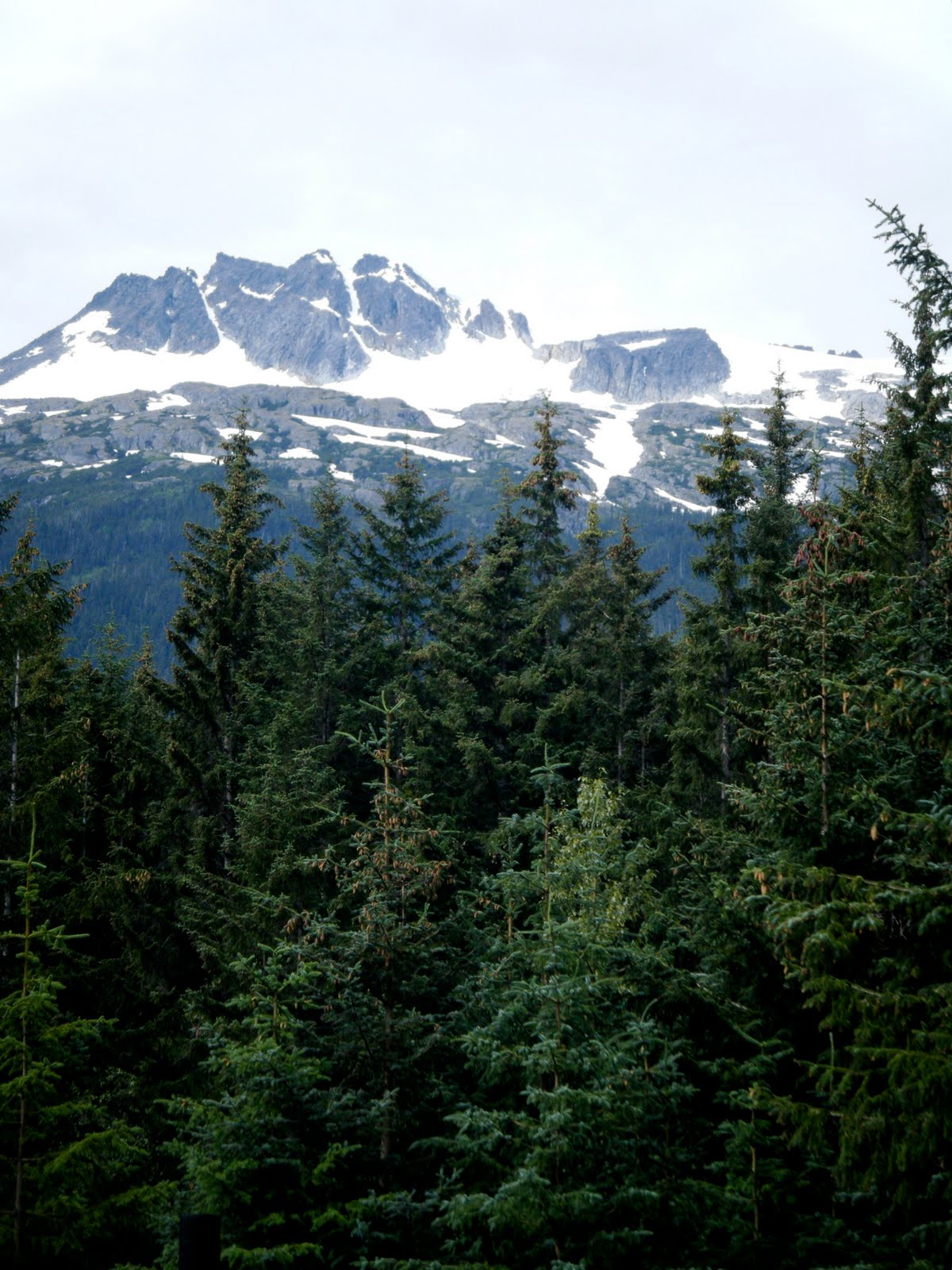 View of Chilkat Mountains from the historic Dyea townsite (above).
 Wild iris now cover the former townsite (above).
 The tidal flats, pictured above and below, were once part of the Pacific Ocean floor. As the glaciers retreated, significant pressure was removed from the land, as a result, the land expanded out, essentially causing a rise in sea level. This trend is termed "isostatic rebound."


Thursday, July 8, 2010
The PSL

Wednesday, July 7, 2010
Biking Around Skagway
After 7 days straight of cloudy, dreary skies, the sun finally came out in Alaska! As a result, the entire town was out hiking, running, biking around town- and smiling. It was eye-opening to finally have a chance to see where I was!
 This was the extent of my bike ride- out to the delta of the Skagway River, where the salmon are going to be running soon (word on the street is pink first and then sockeye)!
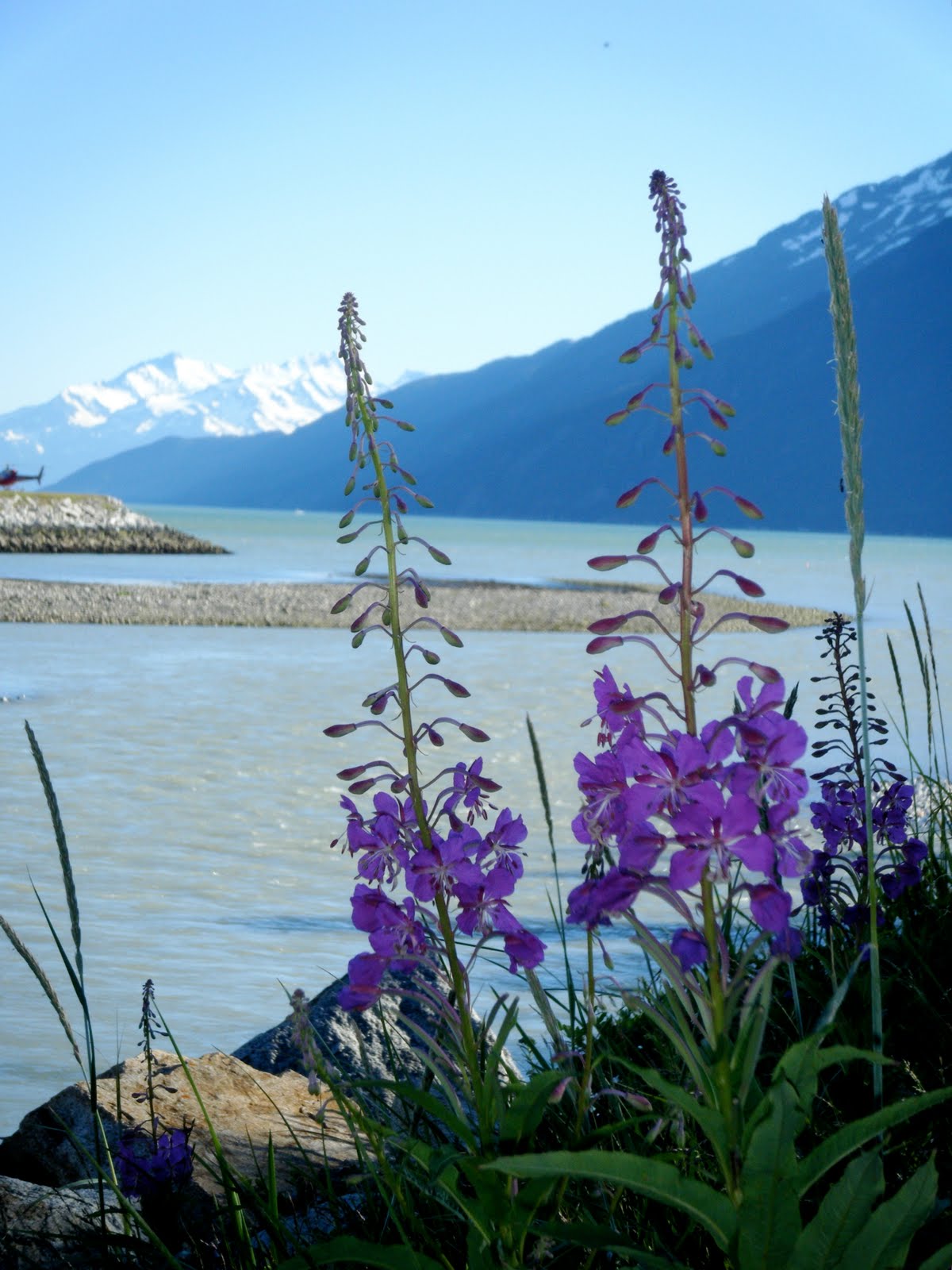
 Alaksan fireweed is one of the few wildflowers in the area, but it has the most beautiful purple hue. I'm still trying to capture it in a photo, but this is fairly close.
 I walked around this whole peninsula yelling "hey bear!" to scare away any grizzlies withing earshot. When I finally stumbled upon a group of 6 people having a bonfire, I felt a little silly, so then I switched to singing to myself. Still not sure which was better.... the bears were probably laughing.
 I ended with checking out Yakutanea Point, a short hike of less than a mile from my doorstep. Apparently a baby whale has been frequenting this peninsula. I might be too pretty soon!

 This was the extent of my bike ride- out to the delta of the Skagway River, where the salmon are going to be running soon (word on the street is pink first and then sockeye)!
 Alaksan fireweed is one of the few wildflowers in the area, but it has the most beautiful purple hue. I'm still trying to capture it in a photo, but this is fairly close.
 I walked around this whole peninsula yelling "hey bear!" to scare away any grizzlies withing earshot. When I finally stumbled upon a group of 6 people having a bonfire, I felt a little silly, so then I switched to singing to myself. Still not sure which was better.... the bears were probably laughing.
 I ended with checking out Yakutanea Point, a short hike of less than a mile from my doorstep. Apparently a baby whale has been frequenting this peninsula. I might be too pretty soon!
Alaskan Radio
I turned on the radio today. As I mentioned previously, we only get one channel. The announcer was reading the personal ads, for people who live in areas without phone service. They included ads such as, "Jim, call Mike," and "Ann is looking to sell a sewing machine. Calls for details."
Subscribe to:
Posts (Atom)