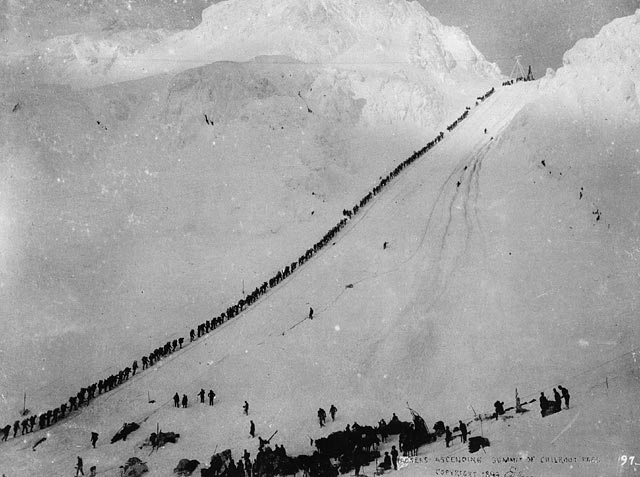
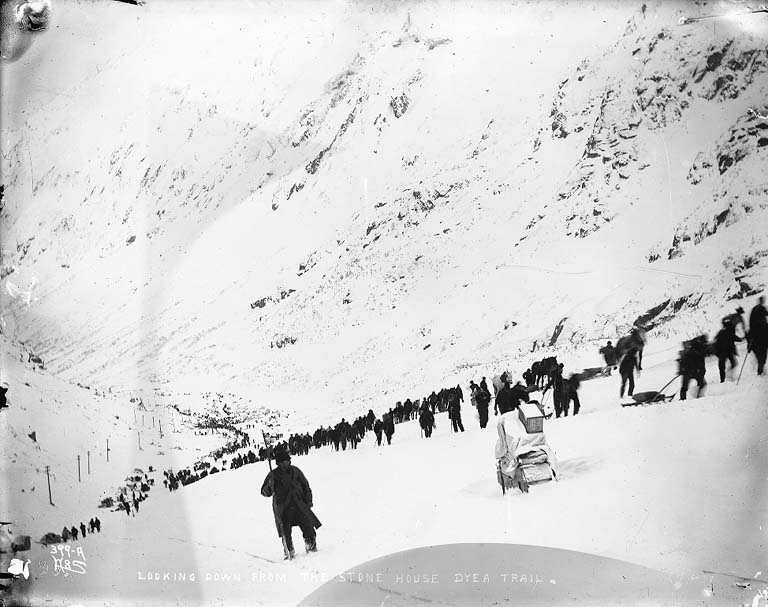
Last weekend I was fortunate enough to have the chance to hike the 33-mile Chilkoot Trail with 6 friends that I have gotten to know since arriving in Skagway 5 weeks ago. It was an incredible weekend; not only was it rejuvenating to escape from the busy port of Skagway for a few days, but it was incredible to hike this historic trail that thousands of stampeeders poured over just 100 years ago.

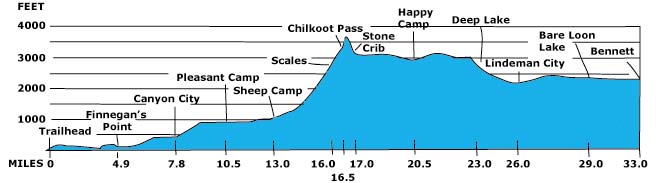
We left bright and early Friday morning, with the intention of hiking 13 miles to Sheep Camp, where we would then attempt the most treacherous section of the trail aptly named 'The Golden Staircase." The weather didn't exactly provide for an enjoyable first day; it poured all day. Despite the harsh conditions, we kept a good pace (maybe to keep from stopping too long in the rain) and even had a chance to get out of the rain at the warming shelter at Canyon City. But the time we arrived at Sheep Camp, it was about 6 pm and we were exhausted. Since the camp was full, the back country ranger there let us set up our tents on the heli-pad landing, with strict orders to move as quickly as possible in the event of a medievac. Fortunately, no helicopters blew away our tents in the night and we awoke to drier, albeit not much more welcoming, skies.

The next morning, we packed up our tents and began the 3 mile hike up Long Hill, to the base of the Golden Staircase. I almost had a hard time moving forward because I couldn't stop looking up; with every 5 minutes we seemed to gain entirely new awe-inspiring views. We hiked along the undulating geography, stopping to admire the cascading waterfalls and azure glacier pools. We took a brief snack break before beginning the 45-degree climb to the summit. The climb to the top involved scrambling up a half mile long boulder field, where the mountain is too shear for any plants to take root, let alone any soil to develop.

At the summit of the Chilkoot Pass, we were greeted by a Canadian flag, marking the boarder, and a 25 degree temperature drop. We enjoyed some hot tea before descending across several slick snow fields to our next camp, Deep Lake.

Along the trek to Deep Lake, the terrain was dotted with several cirques, glacier-fed lakes and babbling streams. It was surreal how quickly we transition from the temperate rain forest surrounding Skagway to alpine tundra. In a mere 17 miles, it was as if we had entered a whole new world.

It was incredible to be surrounded by hanging glaciers- it almost made the 10 strenuous miles we covered that day a little easier, as each step forward yielded more scenic vistas. By the time we got to Deep Lake for the night, we stayed awake just long enough to cook dinner and lock up our food before collapsing into our sleeping bags. I have never felt so comfortable sleeping on the ground!

One the third day, noticed a small patch of blue sky while cooking breakfast, which raised all of our spirits for another 10 mile day. Fortunately, the terrain was a little more forgiving on the third day, and we transitioned into yet another new ecological zone, boreal forest. We even briefly crossed an area that is categorized as glacial desert, but it just seemed to be a sandy patch to me.

We enjoyed a leisurely lunch at a sheltered lake, where we laid on the sun-warmed rocks and listened to loons in the distance. We covered 4 more miles before finally reaching the end of the Chilkoot Trail, at Lake Bennett in British Columbia. We were so exhilarated that we jumped into Lake Bennett, which is the origin of the Yukon River. Needless to say, it was ice cool and we all ran right back out. We spent the night playing cards and relaxing on the somewhat sandy shore of Lake Bennett, enjoying the seemingly endless night until the sun finally set just after midnight.

The next morning, we explored the lake before boarding a train back to Skagway. The train ride was really unique- the tracks ran along a precipitous cliffs and crossed thousand-foot chasms. It took us home across the White Pass, which served as an alternative route to the Chilkoot Trial at the time of the 1887 gold rush. We were all slightly delirious, happy to be returning home, exhausted from lack of sleep, and overwhelmed by the endless mountains.

After walking back into town to drop our packs, we immediately went right back out the door to go to the Skagway Brew Co. for celebratory cheeseburgers and veggie burgers. A perfect ending to a perfect getaway.

 We left bright and early Friday morning, with the intention of hiking 13 miles to Sheep Camp, where we would then attempt the most treacherous section of the trail aptly named 'The Golden Staircase." The weather didn't exactly provide for an enjoyable first day; it poured all day. Despite the harsh conditions, we kept a good pace (maybe to keep from stopping too long in the rain) and even had a chance to get out of the rain at the warming shelter at Canyon City. But the time we arrived at Sheep Camp, it was about 6 pm and we were exhausted. Since the camp was full, the back country ranger there let us set up our tents on the heli-pad landing, with strict orders to move as quickly as possible in the event of a medievac. Fortunately, no helicopters blew away our tents in the night and we awoke to drier, albeit not much more welcoming, skies.
 The next morning, we packed up our tents and began the 3 mile hike up Long Hill, to the base of the Golden Staircase. I almost had a hard time moving forward because I couldn't stop looking up; with every 5 minutes we seemed to gain entirely new awe-inspiring views. We hiked along the undulating geography, stopping to admire the cascading waterfalls and azure glacier pools. We took a brief snack break before beginning the 45-degree climb to the summit. The climb to the top involved scrambling up a half mile long boulder field, where the mountain is too shear for any plants to take root, let alone any soil to develop.
  At the summit of the Chilkoot Pass, we were greeted by a Canadian flag, marking the boarder, and a 25 degree temperature drop. We enjoyed some hot tea before descending across several slick snow fields to our next camp, Deep Lake.
 Along the trek to Deep Lake, the terrain was dotted with several cirques, glacier-fed lakes and babbling streams. It was surreal how quickly we transition from the temperate rain forest surrounding Skagway to alpine tundra. In a mere 17 miles, it was as if we had entered a whole new world.
 It was incredible to be surrounded by hanging glaciers- it almost made the 10 strenuous miles we covered that day a little easier, as each step forward yielded more scenic vistas. By the time we got to Deep Lake for the night, we stayed awake just long enough to cook dinner and lock up our food before collapsing into our sleeping bags. I have never felt so comfortable sleeping on the ground!
 One the third day, noticed a small patch of blue sky while cooking breakfast, which raised all of our spirits for another 10 mile day. Fortunately, the terrain was a little more forgiving on the third day, and we transitioned into yet another new ecological zone, boreal forest. We even briefly crossed an area that is categorized as glacial desert, but it just seemed to be a sandy patch to me.
  We enjoyed a leisurely lunch at a sheltered lake, where we laid on the sun-warmed rocks and listened to loons in the distance. We covered 4 more miles before finally reaching the end of the Chilkoot Trail, at Lake Bennett in British Columbia. We were so exhilarated that we jumped into Lake Bennett, which is the origin of the Yukon River. Needless to say, it was ice cool and we all ran right back out. We spent the night playing cards and relaxing on the somewhat sandy shore of Lake Bennett, enjoying the seemingly endless night until the sun finally set just after midnight.
 The next morning, we explored the lake before boarding a train back to Skagway. The train ride was really unique- the tracks ran along a precipitous cliffs and crossed thousand-foot chasms. It took us home across the White Pass, which served as an alternative route to the Chilkoot Trial at the time of the 1887 gold rush. We were all slightly delirious, happy to be returning home, exhausted from lack of sleep, and overwhelmed by the endless mountains.
 After walking back into town to drop our packs, we immediately went right back out the door to go to the Skagway Brew Co. for celebratory cheeseburgers and veggie burgers. A perfect ending to a perfect getaway.